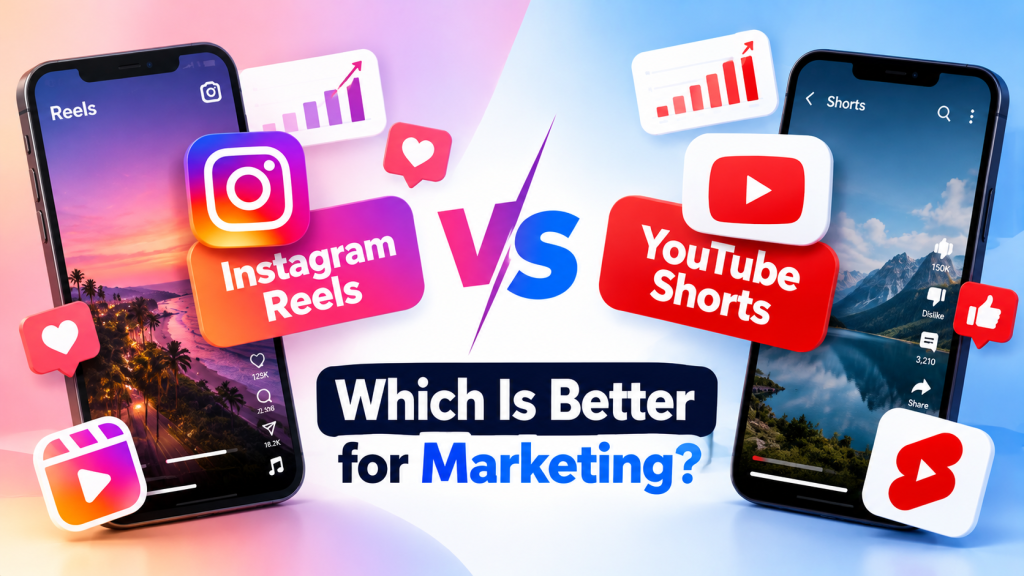
Short-form video content has become an important part of digital marketing. Businesses are increasingly using Instagram Reels and YouTube Shorts to attract audiences, promote products, and generate leads.
Both platforms offer opportunities to reach potential customers through engaging videos. However, they differ in audience behaviour, content discovery, and marketing objectives.
So, Instagram Reels vs YouTube Shorts: which is better for marketing your business?
The answer depends on your target audience, industry, content strategy, and business goals.
Let’s compare both platforms to help you make the right decision.
What Are Instagram Reels?
Instagram Reels are short-form videos that businesses and creators can share on Instagram.
Reels can appear in the Reels feed, Explore, and other eligible areas of Instagram, helping businesses reach existing followers and new audiences.
Brands commonly use Instagram Reels for:
- Product demonstrations
- Customer testimonials
- Behind-the-scenes content
- Influencer collaborations
- Promotional videos
Instagram also supports paid Reels advertisements through Meta Ads Manager, allowing businesses to run campaigns focused on awareness, leads, or sales.
What Are YouTube Shorts?
YouTube Shorts are short-form vertical videos published on YouTube.
They allow businesses to share educational content, product demonstrations, quick tutorials, and entertaining videos.
Unlike Instagram, YouTube also has a strong search and long-form video ecosystem.
A business can use Shorts to introduce a topic and guide interested viewers toward more detailed videos on its YouTube channel.
This makes YouTube Shorts useful for educational marketing and building audience relationships.
Instagram Reels vs YouTube Shorts: Key Differences
| Feature | Instagram Reels | YouTube Shorts |
|---|---|---|
| Main strength | Social discovery and engagement | Video discovery and education |
| Content style | Lifestyle, trends, product videos | Tutorials, tips, demonstrations |
| Audience interaction | Likes, shares, comments, DMs | Likes, comments, subscriptions |
| Paid advertising | Meta Ads Manager | Google Ads |
| Lead generation | Messaging, lead ads, website visits | Website visits, video journeys, ads |
| Best suited for | Visual brands and social commerce | Educational content and expertise |
Neither platform guarantees better engagement or conversions. Results depend on content quality and audience relevance.
1. Which Platform Is Better for Brand Awareness?
Both platforms can help businesses reach people who haven’t interacted with their brands before.
Instagram Reels can be especially useful for fashion, beauty, restaurants, travel, and lifestyle businesses that benefit from visual storytelling.
For example, a clothing brand can showcase new collections through styling videos.
YouTube Shorts can help brands attract viewers interested in tutorials, expert advice, and educational content.
For example, a digital marketing agency might publish short videos explaining common Google Ads mistakes.
Verdict: Instagram Reels may suit visually driven brand awareness, while YouTube Shorts can support educational brand discovery.
2. Which Platform Generates Better Engagement?
Engagement depends on how well your content connects with viewers.
Instagram Reels encourages social interactions through likes, comments, shares, and direct messages.
YouTube Shorts allows viewers to discover creators, subscribe to channels, and explore related videos.
Rather than comparing total views alone, businesses should evaluate meaningful engagement.
Important metrics include:
- Watch time
- Audience retention
- Shares and comments
- Profile or channel visits
- Website clicks
- Enquiries generated
Remember that view-counting methods differ between platforms, so equal view counts don’t necessarily represent equal engagement.
3. Instagram Reels vs YouTube Shorts for Lead Generation
If your primary goal is generating enquiries, Instagram Reels can provide useful conversion opportunities through Meta advertising.
For example, a home interior design company can showcase completed projects and encourage viewers to request a consultation.
YouTube Shorts can help potential customers discover educational content and learn more about a business before making an enquiry.
For example, a financial software company might publish tutorials explaining its product’s features.
Verdict: Instagram Reels can be effective for visually driven direct-response campaigns, while YouTube Shorts may be valuable for educating potential customers and building trust.
4. Which Platform Is Better for E-commerce Sales?
Instagram Reels can help e-commerce brands showcase products through demonstrations, customer experiences, and lifestyle videos.
Businesses can promote eligible Reels through Meta Ads to encourage website purchases.
YouTube Shorts can also influence buying decisions through product reviews, demonstrations, and tutorials.
For example, an electronics brand might use Shorts to demonstrate product features and link eligible viewers to further information.
The better platform depends on the product category, creative approach, advertising performance, and customer buying journey.
5. Which Platform Offers Better Paid Advertising?
Instagram Reels advertising runs through Meta Ads Manager.
Advertisers can use relevant campaign objectives, audience options, creative testing, and conversion tracking.
YouTube Shorts advertising is available through eligible Google Ads campaign types.
Both platforms offer AI-powered ad delivery and campaign measurement.
For businesses investing in social media marketing services, the focus should be on cost per qualified lead, cost per purchase, and return on ad spend rather than video views alone.
6. Which Platform Is Better for Long-Term Marketing?
YouTube Shorts can support a broader video content strategy by connecting short videos with relevant long-form content.
This is especially useful for businesses publishing tutorials, educational videos, and product explainers.
Instagram Reels can help businesses maintain regular audience engagement and showcase products or services through engaging visual content.
However, neither platform guarantees consistent organic reach.
Publishing useful content regularly and reviewing performance are more important than relying entirely on trends.
How to Choose the Right Platform for Your Business
Different businesses may benefit from different short-form video strategies.
| Business Type | Platform Worth Testing First |
|---|---|
| Fashion and beauty | Instagram Reels |
| Restaurants and cafes | Instagram Reels |
| Educational and tutorial content | YouTube Shorts |
| Software and technology | YouTube Shorts |
| Real estate and interior design | Instagram Reels |
| Professional services | Both, depending on audience |
These are starting recommendations, not fixed rules.
If your business has limited resources, begin with one platform and evaluate results before expanding.
Best Practices for Short-Form Video Marketing
Whether you choose Instagram Reels or YouTube Shorts, follow these practical strategies.
1. Capture attention quickly: Start with a customer problem, useful question, or compelling demonstration.
2. Use vertical videos: Create mobile-friendly 9:16 videos with clear visuals.
3. Focus on value: Share practical information, genuine benefits, or useful entertainment.
4. Add clear calls to action: Encourage relevant actions such as visiting your website, exploring products, or contacting your business.
5. Test creative formats: Compare tutorials, testimonials, product demonstrations, and educational videos.
6. Monitor conversions: Track enquiries, purchases, and qualified leads rather than focusing only on views.
A professional digital marketing agency can help businesses develop a video content strategy, manage paid campaigns, and evaluate marketing performance.
Conclusion
Instagram Reels and YouTube Shorts both offer valuable marketing opportunities, but they serve different audience behaviours and business objectives.
Instagram Reels can work well for visually appealing products, customer engagement, and direct-response advertising.
YouTube Shorts can be effective for educational content, building expertise, and introducing viewers to longer videos.
The best short-form video platform isn’t necessarily the one generating the most views. It’s the one helping your business attract the right audience, generate qualified leads, and increase sales.