Is your website struggling to rank on Google despite publishing regular content? The problem could be poor on-page SEO.
Search engines need to understand what your pages are about, while visitors expect helpful information and a smooth browsing experience.
As we move into 2027, effective on-page SEO means more than adding keywords to titles and headings. It involves matching search intent, improving content quality, strengthening internal linking, and delivering a better user experience.
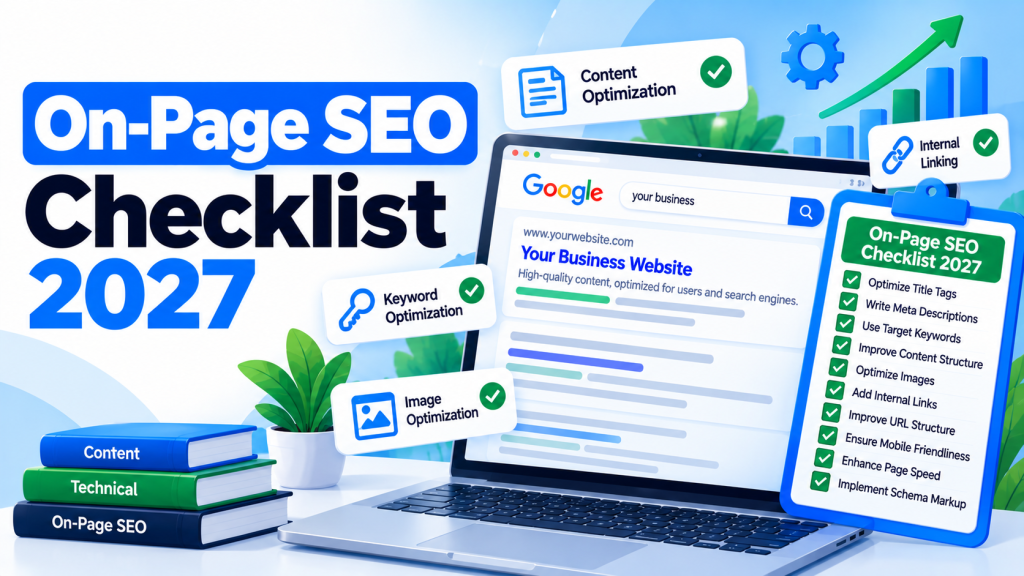
This on-page SEO checklist for 2027 covers 15 essential optimization techniques to help businesses improve their website’s search visibility.
What Is On-Page SEO?
On-page SEO is the process of optimizing individual website pages to help search engines understand their content and improve their visibility in relevant search results.
It includes elements such as title tags, meta descriptions, headings, content quality, images, internal links, and URL structure.
Unlike off-page SEO, which involves external signals such as backlinks, on-page SEO focuses on improvements made directly to your website.
1. Conduct Proper Keyword Research
Effective on-page SEO starts with understanding what your target audience searches for.
Identify a primary keyword and relevant secondary keywords for each important page.
Use tools such as Google Keyword Planner, Google Search Console, Ahrefs, or Semrush to discover search opportunities.
Focus on relevance and search intent rather than keyword volume alone.
2. Match Content With Search Intent
Search intent explains why someone enters a query into Google.
Common search intents include:
- Informational: Looking for answers or guidance
- Commercial: Comparing products or services
- Transactional: Ready to purchase or enquire
- Navigational: Searching for a specific website
For example, someone searching “how to improve SEO” expects educational content, while “professional SEO services” indicates commercial intent.
Create pages that directly address each user’s needs.
3. Optimize SEO Title Tags
Your title tag helps search engines and users understand the main topic of a page.
Write unique, descriptive titles that naturally include the primary keyword.
Example:
Poor: Home | Our Services
Better: Professional Home Cleaning Services in Delhi
Keep titles concise and avoid unnecessary keyword repetition.
Google may generate a different title link based on page content and other signals.
4. Write Compelling Meta Descriptions
Meta descriptions summarize page content and can encourage users to visit your website.
Write a unique description highlighting the page’s main value.
Include relevant keywords naturally and use action-oriented language when appropriate.
Although meta descriptions aren’t a direct Google ranking factor, they can influence how users evaluate your search listing.
Google may also generate snippets from page content.
5. Use Proper H1, H2, and H3 Headings
Headings organize content and make it easier to understand.
Use a clear main H1 heading that describes the page topic, followed by relevant H2 and H3 subheadings.
For example:
- H1: Complete Guide to Google Ads
- H2: How Google Ads Works
- H2: Benefits of Google Ads
- H3: Search Campaigns
- H3: Performance Max Campaigns
Avoid adding keywords unnaturally to every heading.
6. Create Helpful and Original Content
Content quality remains an important part of SEO.
Create pages that answer user questions accurately and provide useful information.
Include relevant examples, practical advice, and original insights where possible.
Avoid copying competitor content or publishing repetitive AI-generated articles without meaningful value.
Google recommends creating helpful, reliable, people-first content.
7. Optimize Your Website URLs
Use short, descriptive URLs that clearly explain the page topic.
Example:
Good: example.com/local-seo-services/
Poor: example.com/page123?id=789
Avoid unnecessary parameters and complex URL structures when creating new pages.
Don’t change existing URLs without a clear reason and an appropriate redirect plan.
8. Improve Internal Linking
Internal links help users and search engines discover related content.
For example, a blog about technical SEO can link to a relevant technical SEO services page.
Use descriptive anchor text that explains the destination.
Make sure important service pages are accessible through navigation and relevant internal links.
9. Optimize Images and Alt Text
Large or poorly optimized images can affect website performance.
Use compressed images, suitable formats, and descriptive file names.
Add useful alt text that explains informative images.
For example:
Alt text: Technician repairing a residential air conditioner
Avoid stuffing keywords into image descriptions.
10. Improve Mobile Usability
Your website should provide a smooth experience on smartphones and tablets.
Check that text is readable, buttons are easy to tap, and forms work correctly.
Since Google uses mobile-first indexing, important content should remain accessible on mobile devices.
11. Improve Page Speed and Core Web Vitals
Website performance affects user experience and can influence search performance.
Use Google PageSpeed Insights to identify issues.
Review these Core Web Vitals:
| Metric | Good Threshold |
|---|---|
| Largest Contentful Paint (LCP) | 2.5 seconds or less |
| Interaction to Next Paint (INP) | 200 milliseconds or less |
| Cumulative Layout Shift (CLS) | 0.1 or less |
Focus on meaningful performance improvements rather than achieving perfect tool scores.
12. Add Relevant Structured Data
Structured data helps search engines interpret certain types of website information.
Depending on your content, consider:
- Organization schema
- LocalBusiness schema
- Product schema
- Article schema
- BreadcrumbList schema
Use accurate information and validate supported markup through Google’s Rich Results Test.
Structured data doesn’t guarantee rich results or higher rankings.
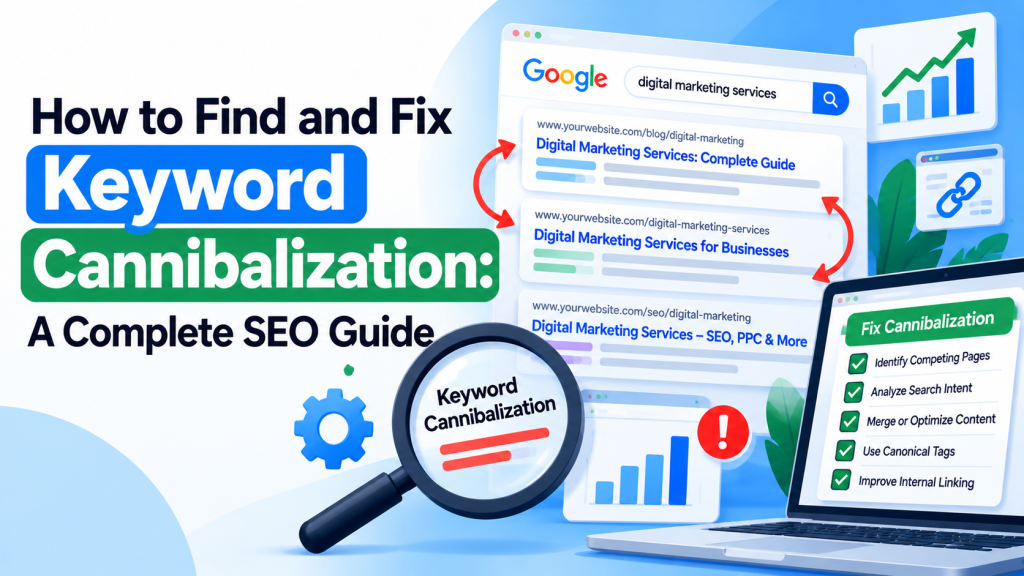
13. Prevent Keyword Cannibalization
Keyword cannibalization can occur when multiple pages target nearly identical search intent without providing distinct value.
Review your existing content before creating new pages.
When appropriate, consolidate overlapping articles, clarify search intent, or improve internal linking.
Avoid creating multiple service pages that differ only slightly.
14. Build Trust and Demonstrate Expertise
Customers are more likely to trust businesses that provide clear, accurate information.
Include relevant author details, genuine testimonials, case studies, and transparent contact information.
For service pages, clearly explain what you offer and how customers can enquire.
Demonstrating real experience and credibility supports helpful content and user confidence.
15. Monitor On-Page SEO Performance
On-page SEO requires regular monitoring.
Use Google Search Console and Google Analytics 4 to evaluate important performance metrics.
| Metric | Why It Matters |
|---|---|
| Organic Clicks | Measures visits from Google Search |
| Impressions | Shows search visibility |
| Average Position | Helps monitor ranking trends |
| Organic Conversions | Measures valuable website actions |
| Engagement Rate | Indicates visitor interaction |
| Indexed Pages | Confirms important page eligibility |
Review changes over meaningful periods and prioritize pages with strong business potential.
Common On-Page SEO Mistakes to Avoid
Even well-designed websites can struggle with avoidable SEO issues.
Common mistakes include:
- Keyword stuffing
- Duplicate title tags and content
- Missing or unclear headings
- Weak internal linking
- Ignoring search intent
- Poor mobile usability
- Publishing thin or outdated content
- Focusing only on rankings instead of conversions
A regular on-page SEO audit can help identify and resolve these problems.
Conclusion
Successful on-page SEO in 2027 requires a balanced approach to keyword research, content quality, search intent, and website usability.
Optimizing titles, headings, internal links, images, and structured data helps build a website that is easier for both users and search engines to understand.
However, SEO success shouldn’t be measured by rankings alone.
The goal of on-page SEO is to attract relevant visitors, answer their questions, and turn organic traffic into meaningful business opportunities.
Use this checklist to review your website regularly and create a stronger foundation for long-term organic growth.